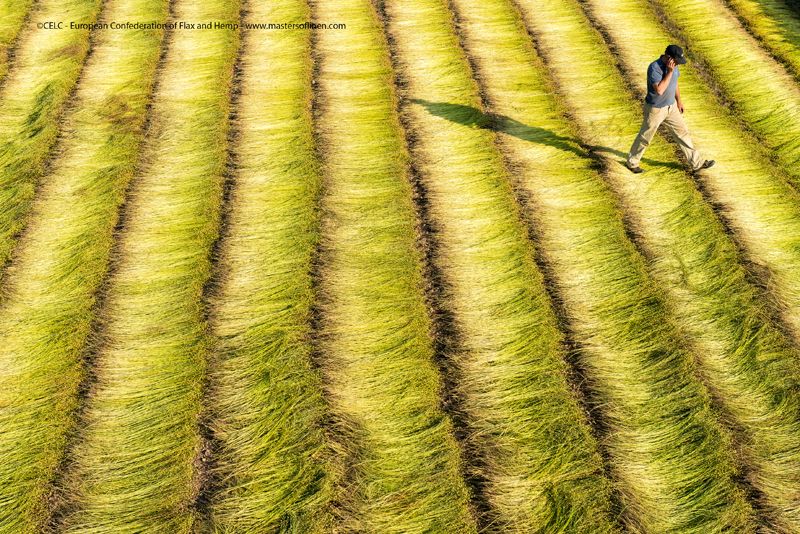
In recent years, Kazakhstan has become one of the key players in the global oil flax (linseed) market, actively increasing production and exports. Thanks to favorable economic conditions, climate changes, and government support, the country is shifting from grain crops to oilseeds, including flax. In 2025, flax-planted areas grew by 55% to 1.35 million hectares, with the harvest expected at around 1 million tons. This allows Kazakhstan to set new export records, especially amid restrictions on supplies from Russia.
Impact on the European Market
The European Union imposed tariffs on Russian flax—20% in 2025, with plans to raise them to 50% in 2026—creating an opportunity for Kazakh suppliers.
In the first four months of the 2025/26 season (September–December), Kazakhstan exported 520 thousand tons of flax, 2.5 times more than during the same period last year, nearly matching the total exports of the previous season. The main destinations are EU countries: Belgium (156 thousand tons), Poland (37 thousand), Estonia (31 thousand), Germany, and others. In the first three months of the season, exports to the EU and China grew by 211% to 340.7 thousand tons.
This drove up prices: Kazakh flax on FCA terms costs $510–515 per ton, while DAP Poland is €535–540 per ton. European buyers are actively raising bids, reflecting supply shortages and strengthening Kazakhstan’s market position. Forecasts indicate that the EU market will grow to 751 thousand tons and $613 million by 2035, with Kazakhstan as the main supplier. The country plans to reach $1 billion in oilseed exports by 2028, focusing on processing and added value.
Global Demand Today
As of March 2026, global demand for oil flax remains high due to limited supply and logistical challenges. Key buyers are Europe and Asia (especially China, where exports increased 250% to 108.6 thousand tons in the first months of the season). Prices are rising: in the EU they increased by $55 per ton since the beginning of the year, and globally the market is supported by demand for organic and high-quality flax from Kazakhstan and Canada. Stock shortages and weather risks intensify pressure, making Kazakh flax highly sought after for the food, pharmaceutical, and industrial sectors.
Overall, Kazakhstan not only fills gaps in the European market but also strengthens global competition, contributing to price stabilization and supply diversification.
Impact on the European Market
The European Union imposed tariffs on Russian flax—20% in 2025, with plans to raise them to 50% in 2026—creating an opportunity for Kazakh suppliers.
In the first four months of the 2025/26 season (September–December), Kazakhstan exported 520 thousand tons of flax, 2.5 times more than during the same period last year, nearly matching the total exports of the previous season. The main destinations are EU countries: Belgium (156 thousand tons), Poland (37 thousand), Estonia (31 thousand), Germany, and others. In the first three months of the season, exports to the EU and China grew by 211% to 340.7 thousand tons.
This drove up prices: Kazakh flax on FCA terms costs $510–515 per ton, while DAP Poland is €535–540 per ton. European buyers are actively raising bids, reflecting supply shortages and strengthening Kazakhstan’s market position. Forecasts indicate that the EU market will grow to 751 thousand tons and $613 million by 2035, with Kazakhstan as the main supplier. The country plans to reach $1 billion in oilseed exports by 2028, focusing on processing and added value.
Global Demand Today
As of March 2026, global demand for oil flax remains high due to limited supply and logistical challenges. Key buyers are Europe and Asia (especially China, where exports increased 250% to 108.6 thousand tons in the first months of the season). Prices are rising: in the EU they increased by $55 per ton since the beginning of the year, and globally the market is supported by demand for organic and high-quality flax from Kazakhstan and Canada. Stock shortages and weather risks intensify pressure, making Kazakh flax highly sought after for the food, pharmaceutical, and industrial sectors.
Overall, Kazakhstan not only fills gaps in the European market but also strengthens global competition, contributing to price stabilization and supply diversification.